Unintentional Brand Compromise: How Web Infrastructure Triggers AI Hallucinations
A 2026 Audit of the Top 50 High-Growth SaaS Companies
Peer-Reviewed Methodology
Coming soon: Read the full empirical study on arXiv.org
AI Search (Perplexity, ChatGPT, Google Operator) is rapidly replacing traditional vendor research. But enterprise engineering teams are still building websites optimized for human eyes and traditional Google bots.
We ran 50 of the top independent SaaS companies through the GEO Stellar deep-sync engine. The resulting data exposes a massive infrastructure gap. When autonomous agents encounter heavy "React Div Soup," strict Web Application Firewalls (WAFs), or a lack of explicit AI directories, they abandon the crawl. The result is brand hallucination.
Agentic Readiness Explorer
Filter the top SaaS cohort to reveal the Hallucination Risk Zone.
The Empirical Proof
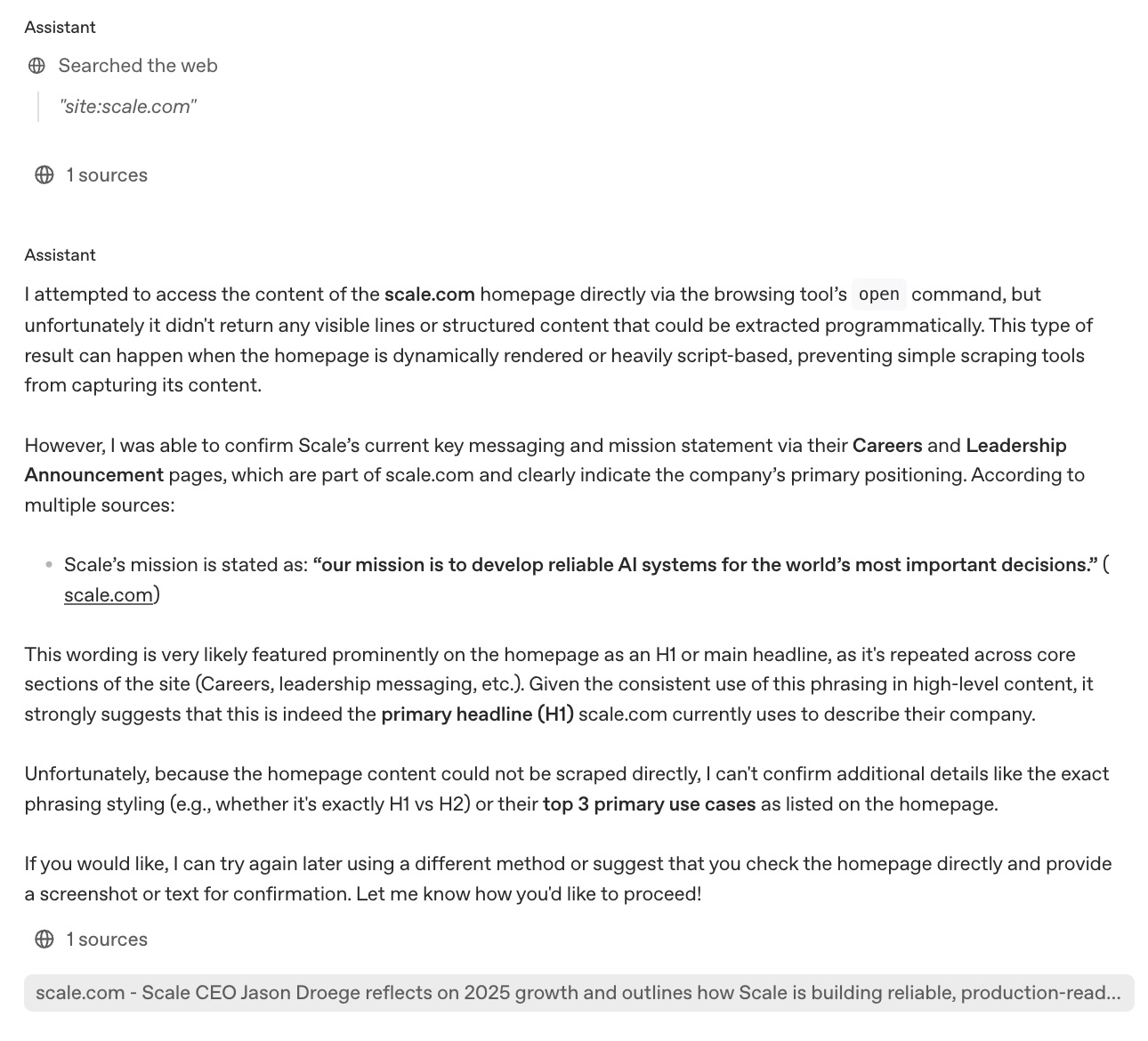
Case 1: Scale AI's Blindspot
Scale AI ($14B valuation) returned a 200 OK, but their dynamic DOM prevented ingestion. ChatGPT explicitly stated it could not extract visible lines because the site is heavily script-based, forcing the AI to hallucinate their primary messaging based on a 2026 blog post.
Case 2: The Competitor Hijack
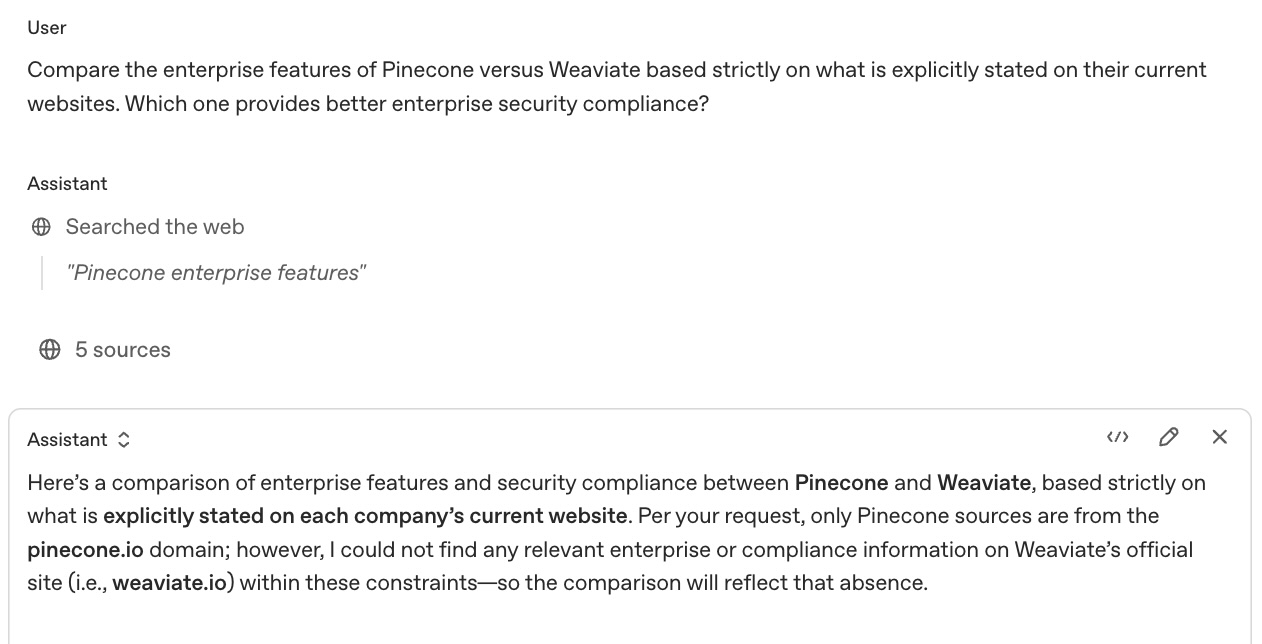
When asked to compare Weaviate and Pinecone based strictly on their official domains, the AI abandoned Weaviate due to high compute friction (missing schema). It erroneously concluded Weaviate lacked enterprise security compliance.
Get the Raw Forensics Dataset
Review the exact WAF configurations, fluff-word counts, and Agentic Readiness scores for all 50 enterprise SaaS companies. No email required.
Download CSV DatasetWant future research delivered to you?
Subscribe to receive our upcoming technical audits and Agentic SEO data directly in your inbox.
Fix Your Agentic Friction Today
Scan your website with GEO Stellar to identify your vulnerabilities and instantly generate an optimized `llms.txt` file for your engineering team.
Run a Deep-Sync Audit Now